
Dental disease is one of the most common diseases in dogs and cats. There are number of different types of dental disease, but the most common include periodontal disease, fractured teeth, tooth resorption lesions, malocclusion (misalignment) of teeth, and oral tumors affecting the teeth and jaw. It is possible for your pet to have multiple types of dental disease at the same time.
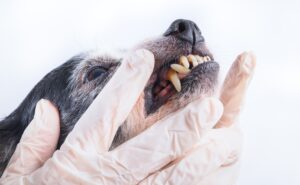
Periodontal disease is present in 80% of dogs and cats over 3 years of age that have not received routine dental care. Periodontal disease occurs when plaque and tartar adhere to the teeth and spread under the gum line. This accumulation of bacteria and mineralized debris causes gingivitis, bone loss around the teeth, and gum recession. Periodontal disease can lead to tooth loss, weakening of the jaw bone, bone infection, and increases risk of systemic infection in organs like the heart, kidneys, and liver. Daily home care (i.e. tooth brushing, dental chews, water additives) is important to maintain your pet’s oral health. Periodic dental cleaning and exam with oral radiographs (x-rays) under anesthesia are also recommended to maintain your pet’s oral health.
Fractured teeth are extremely common in both dogs and cats. The most common reason teeth are broken include trauma to the teeth or chewing on bones or other hard objects. Depending on how much of the tooth is fractured there are several treatment options including dentin bonding, root canal, or extraction of the affected tooth.
Tooth resorption is a condition mostly found in cats, but can also be seen in dogs. For reasons that are not yet known, the body attacks the tooth and “eats” through the enamel. Eventually, the entire tooth can be destroyed, but this is a painful process and these teeth require extraction.

Malocclusion, or misalignment, of the jaw and teeth is a common problem in dogs and occasionally in cats. It is common in specific breeds (i.e. English bulldogs, Boxers, Persian cats) and can be hereditary. Sometimes the malocclusion does not cause any issues, but in other cases, it is possible for teeth to hit other teeth or soft tissues causing trauma and pain. It may be necessary to extract teeth or perform an orthodontic procedure on your pet.
Lastly, oral tumors are seen in both cats and dogs. There are many different types of oral cancers. If a mass if found in your pet’s mouth, a biopsy will be recommended to determine cancer type and if it is malignant (likely to spread) or benign. Based on this biopsy, your veterinarian will be able to provide more information about prognosis and treatment options.
It is very important for your pet to have annual exams with a veterinarian that include a thorough oral evaluation. Further information about specific dental diseases can be found at the American Veterinary Dental College website (www.avdc.org).
– Shelley Nelson, DVM
Source: www.avdc.org Accessed May 17, 2017.