
Cutaneous means “skin.” A cutaneous foreign body can refer to any object that penetrates or otherwise becomes lodged under the skin. Often, this is a thorn or a grass seed. If the object is very small and lodged shallowly, the body may be able to move it out to the surface on its own. These minor cases may not need medical attention, or can respond to warm soaks or compresses. Objects that are lodged in the deep layers of the skin have a tendency to form small pockets of swelling and irritation.
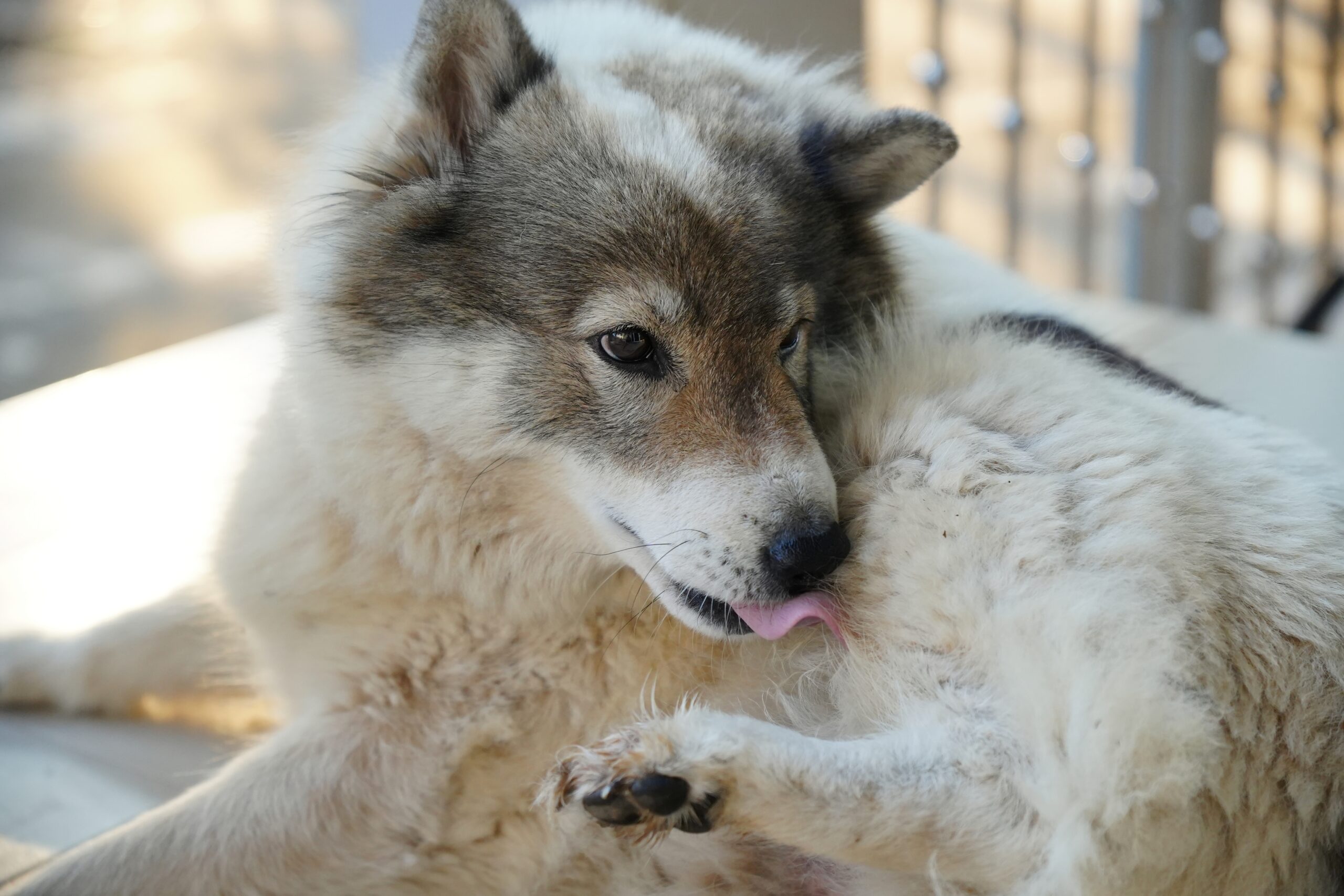
You may notice the pet seems preoccupied with the area, licking and chewing at it. A swelling may begin to form under the skin that may be tender. If the swelling is left untreated for long enough, it may rupture through the skin, and pus may drain from the resulting wound, called a draining tract. This happens because the body recognizes that the object inside does not belong there, and begins to try to break it down by the process of inflammation – the body’s natural reaction to infection or injury. Inflammation causes redness, swelling, pain, and sometimes fever. White blood cells, the body’s protection against disease, are drawn to the area where they consume the dirt, bacteria, and damaged skin cells. Pus is formed from the buildup of dead white blood cells.
Antibiotics alone are often ineffective for this condition, because the medication cannot penetrate through the pus to reach the bacteria. Also, the inflammation will continue to be triggered until the foreign object is removed. Therefore, your veterinarian will likely have to lance the area and flush out the pus and the foreign object.
This is often performed under short-term sedation. A small skin incision is made, and sterile water or saline is used to drain and flush the area. In some cases, a strip of sterile latex called a drain is placed inside the wound to make an exit pathway for pus to drain out.
Your pet may be sent home with daily oral antibiotics or given an injection of a long-lasting antibiotic. Pain medicine may also be indicated. If a drain has been placed, it will need to be removed after about 4 days. Keep the area clean and dry, and if an E-collar has been sent home, keep it on at all times. Your pet can significantly slow the healing or do more damage if allowed to lick at the area. If the area begins to show any of the signs of inflammation again – heat, swelling, redness, or pain – call your veterinarian to schedule a recheck.
Source- Roger Gfeller, Michael Thomas, and Isaac Mayo. “Abscess.” Revised March 8, 2017. http://www.vin.com/members/cms/project/defaultadv1.aspx?id=4951328&said=1