
All members of the onion family, including garlic, chives, and leeks, are toxic to dogs and cats. Cats are more severely affected. In general, the stronger the onion’s smell and flavor, the higher the toxicity. Onion powders are highly concentrated so it takes a smaller amount of onion powder to cause illness.
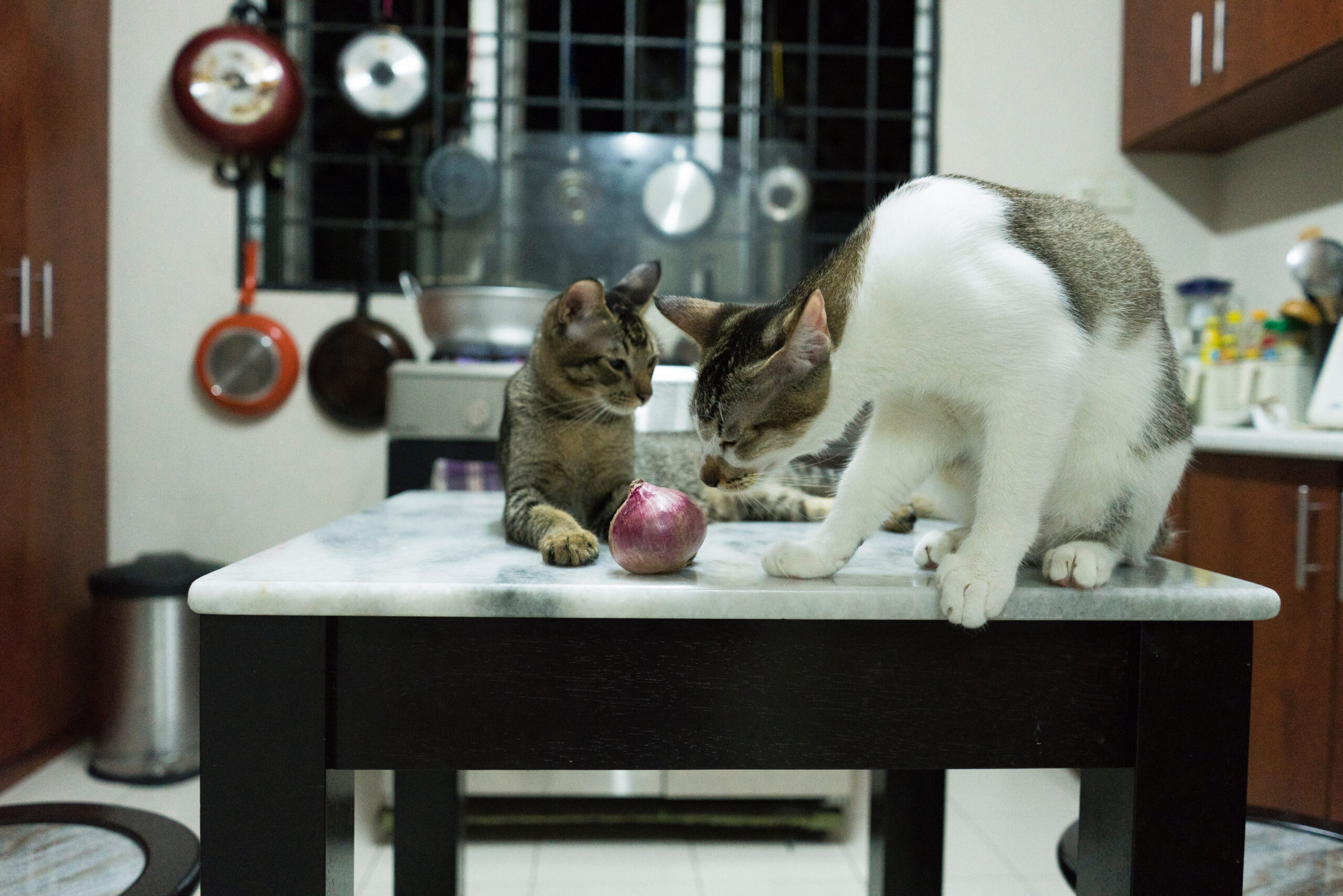
Onion toxicity damages red blood cells, causing them to break open. Red blood cells deliver oxygen to the body and carry away carbon dioxide. The broken cells and their contents must be processed and new red blood cells must be made to replace them. Any amount of onion ingestion causes some degree of red blood cell damage. At low levels, the body is able to clean up the damage and make new, healthy cells before the pet becomes ill. If the number of damaged cells is high enough to overwhelm the body’s ability to compensate, disease is seen. The leaked contents of broken cells overwhelm the kidneys, causing damage that may not be reversible. The body is unable to replace the cells fast enough, causing anemia, or abnormally low numbers of red blood cells. When there aren’t enough red blood cells, the body cannot get enough oxygen.
Red blood cells begin to die within a day after onion ingestion and they continue to do so in increasing numbers for about three days. Most pets do not begin to show signs of illness until 3-5 days after ingestion. Symptoms are related to low oxygen levels in the body including weakness, lethargy, rapid breathing, and a rapid heart rate. There may be a yellow tinge to your pet’s gums, skin, or eyes (often called “icterus” or “jaundice”) due to the build-up of broken cells. The urine may be dark red to brown.
The diagnosis is made based on a history of ingesting onions several days before the illness. A blood test will be needed to determine severity of anemia and to assess secondary kidney damage.
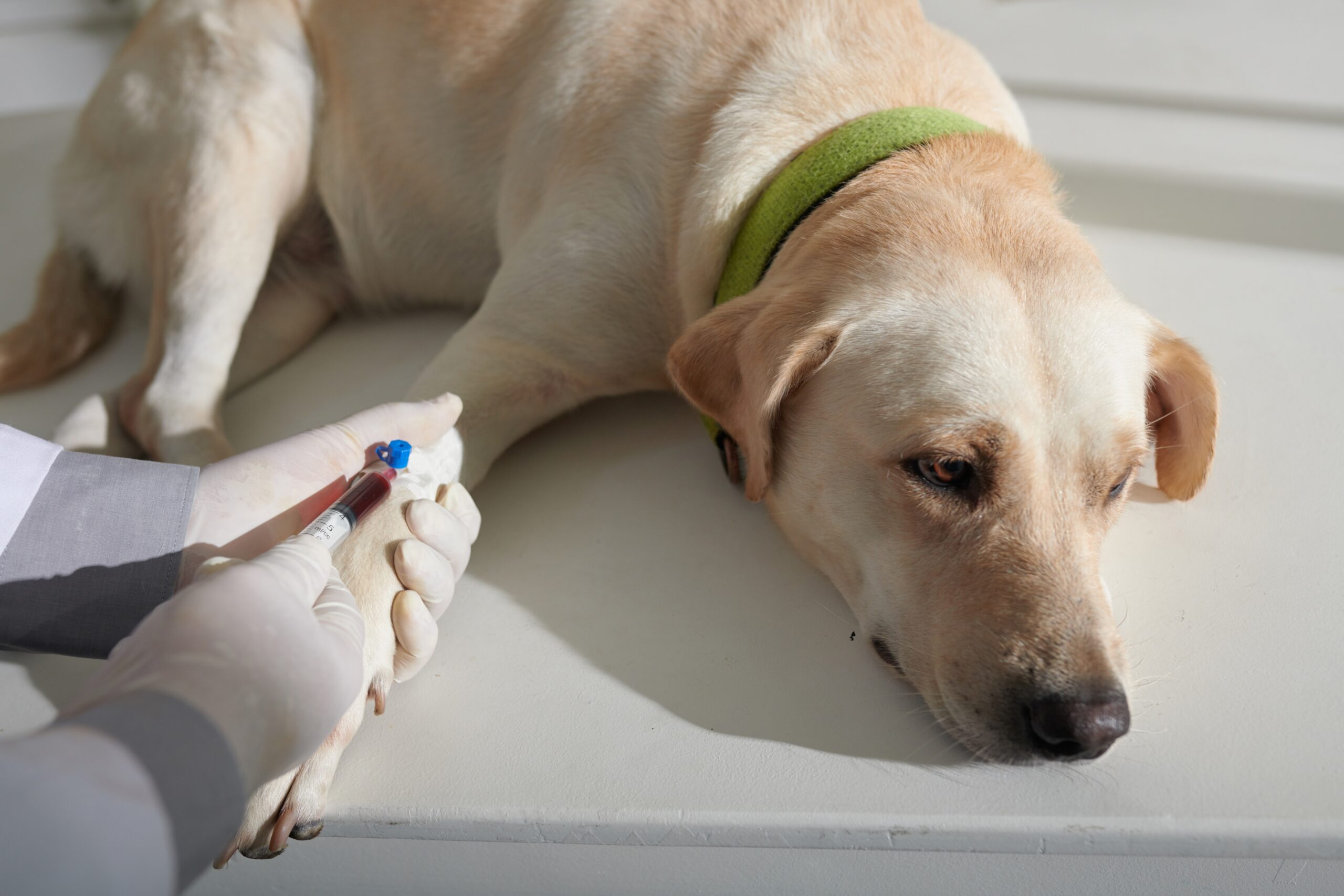
If your pet ingested the onions within 2 hours of your appointment, vomiting can be induced to remove all or some of the onions from the stomach. If it has been within 8 hours, a toxin-absorbing liquid called activated charcoal may be given. It is unknown how effective activated charcoal is with onion toxicity specifically, so your pet may still experience illness. If your pet is already showing the symptoms discussed above, the red blood cell damage has already occurred, and these treatments are no longer helpful. There is no known antidote to stop or reverse the red blood cell damage. Treatment involves supportive care to allow the body recovers. Pets with severe anemia may require blood transfusions. Pets may also require IV fluids to aid the body in clearing the damaged cells. This helps reduce the degree of kidney damage. It is important to repeat blood work after recovery to be certain the anemia has completely resolved and to check for kidney failure.
The chances of your pet making a complete recovery vary based on the amount of onion ingested, severity of anemia, and when treatment was started. Death or secondary kidney failure is possible when the amount ingested was very high relative to size or if treatment was delayed for too long.
– Jessica Purkey, DVM
Source: Sharon Gwaltney-Brant DVM, PhD, DABVT, DABT. “Allium (Garlic/Onion) Toxicosis.” Veterinary Information Network Canine Associate. Last Updated 20 March 2016. url: http://www.vin.com/Members/Associate/Associate.plx?from=GetDzInfo&DiseaseId=5651